Why does my dog eat so fast, and does it matter?
· 5 min read
Almost every dog owner has watched a full bowl disappear in under two minutes and wondered whether to worry about it. The honest answer is that it depends — on the dog, on the breed, and mostly on what happens next.
It's usually competition, not greed
Eating quickly is normal behaviour for an animal that evolved eating in a group. If food is finite and shared, the fast eater gets more of it. That instinct doesn't disappear because a dog now lives alone in a flat with a reliable supply of kibble.
It shows up more strongly in dogs who came from litters where food was competitive, from shelters, or from multi-dog homes. It is not a training failure and it is not something you can correct by telling them off — the behaviour is doing exactly what it evolved to do.
When it's worth doing something about
The reason to slow a dog down isn't the speed itself, it's what comes with it. Swallowing fast means swallowing air, and that can lead to a dog bringing food straight back up a few minutes later, or being visibly uncomfortable after meals.
There is also a more serious concern in deep-chested breeds — gastric dilatation-volvulus, usually called bloat — which is a genuine emergency. We are not going to tell you that a slow feeder prevents it, because that's a medical claim we're not qualified to make and the evidence isn't ours to summarise. What we will say is that if you have a large deep-chested dog, this is a conversation to have with your vet rather than with a shop.
What actually slows a dog down
Three approaches work, in roughly this order of effectiveness for most dogs:
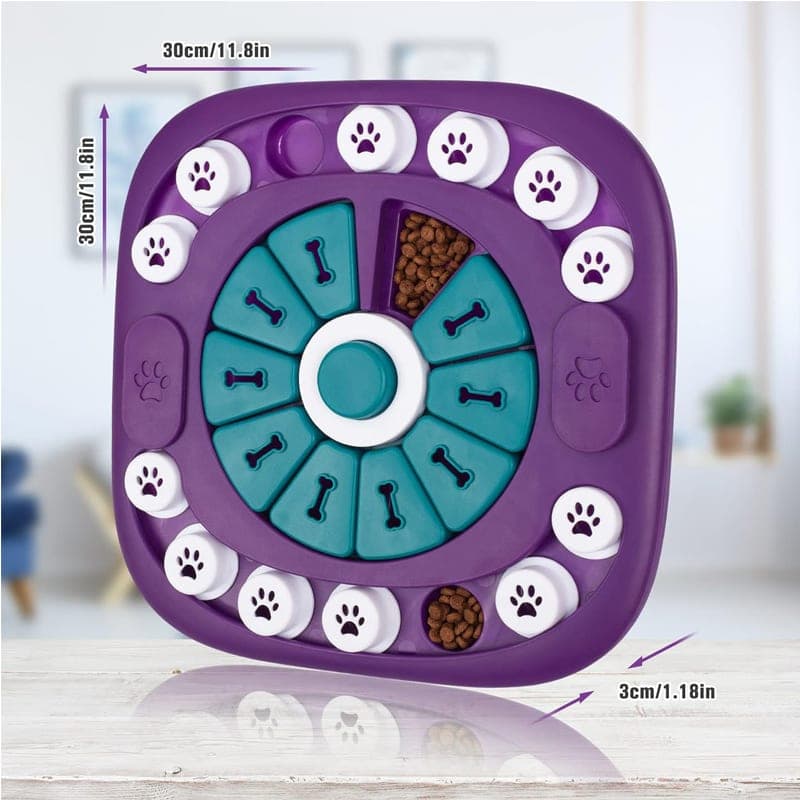
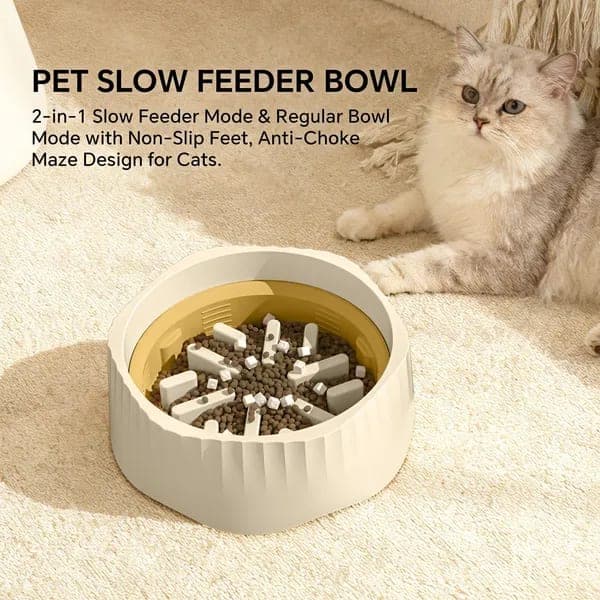
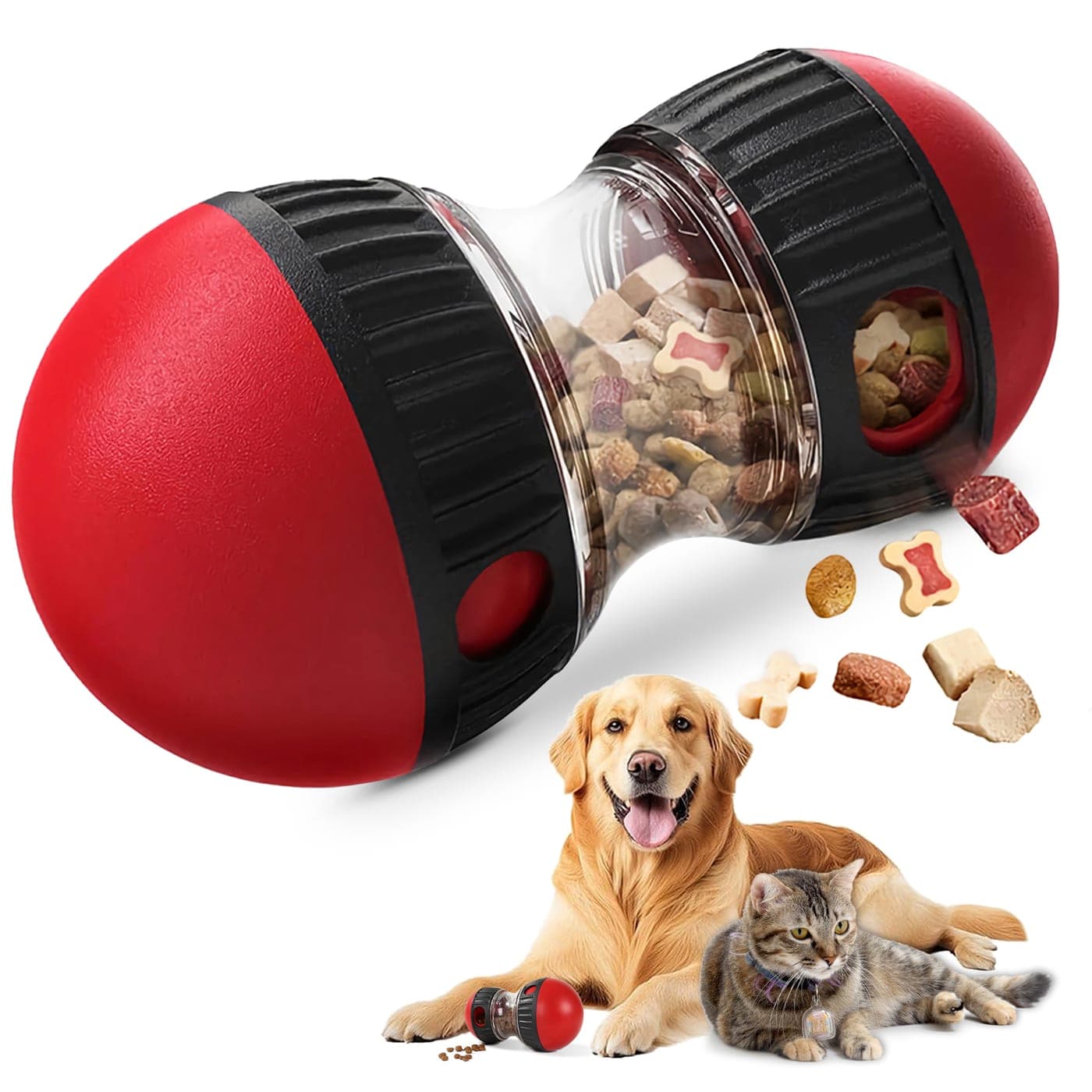
- Make the food harder to reach. A maze bowl, a puzzle board or a treat-dispensing ball turns one action into many. This is the biggest single change you can make.
- Make them move for it. Scatter-feeding across a lawn or using a rolling dispenser adds physical effort, which slows things further and tires them out at the same time.
- Split the meal. Two smaller portions twenty minutes apart is free, takes no equipment, and helps a surprising number of dogs.
The mistake most people make first
Going straight to the hardest setting. A dog who has always had an easy bowl and is suddenly handed a sealed puzzle will often give up, walk away, and be suspicious of it next time.
Start deliberately easy — sliders half open, dispenser aperture wide, food in the outer channels only. Let them win quickly for the first three or four meals, then make it harder. You're teaching a game, and games that are impossible on day one don't get played on day two.
How long should a meal take?
There's no correct number, and anyone quoting one precisely is guessing. As a rough working target, if a meal that used to vanish in ninety seconds now takes five to fifteen minutes, you have changed the thing that matters. Past that you're mostly optimising for your own entertainment.
Related problems